
Agri-Core
February

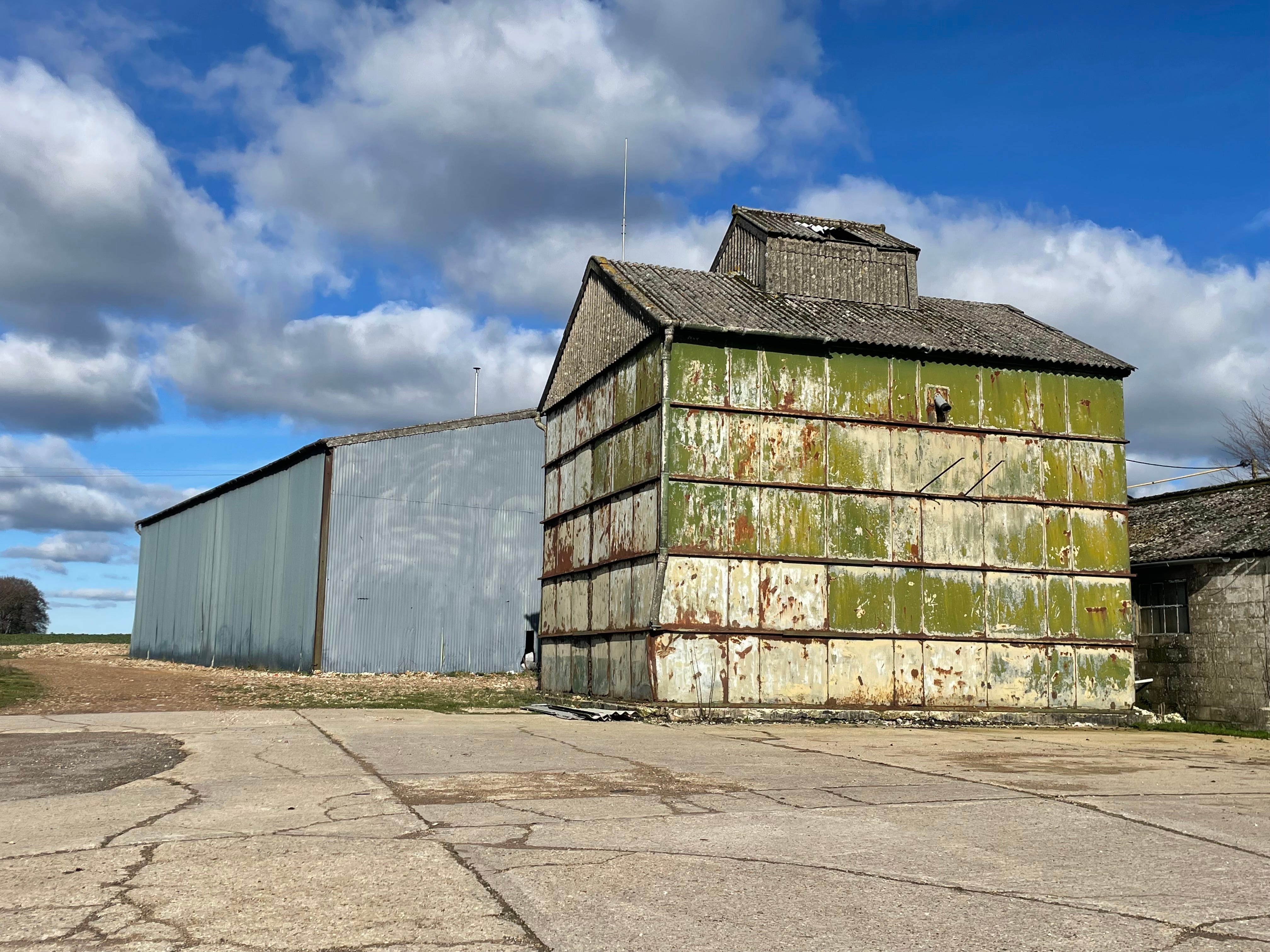
My morning walks continue to feel like a scene from the French supernatural series The Returned (suspicious things floating in ditch water and every attempt to escape the village on foot thwarted by some mysterious force*). Apart from the snowdrops, there is not much blooming or budding around the flooded lanes and there has been a concerted effort to manage the land, so many trees have been felled, leaving great gaps on the horizon. The walks can feel rather bleak. But they have also revealed much that is often hidden: against the backdrop of grey skies and framed by patchy hedgerow, the farms appear. They are always there, of course – my part of West Oxfordshire is predominately agricultural with the odd gravel pit lake thrown into the mix, so I am nearly always walking across a farmer’s field – but the stark winter landscape brings them more clearly into focus.
Evidence sits quietly all over the land: glimpses of a brash tractor wheel and rusted offcuts of machinery; electric fencing jutting upwards from the mud; a bright sign warning of – or celebrating – a rural surveillance scheme. As I pass a barn filled with bales of silage, stacked like giant toilet rolls, there is a moan from the building next to it, bovine voices resonating within.


I’ve just finished Andrew Miller’s The Land in Winter, in which one of the characters is an inexperienced but forward-thinking farmer of the 1960s, very much aware of the limited value of his small agricultural estate and the potential for growth into the countryside beyond. In one scene, he stands in an aircraft hangar fallen into disuse after the war and pictures it crammed with beef cattle, tended and reared using modern intensive methods, the surrounding fields planted with pea silage and barley meal to feed them. The scene combines nature, commerce, innovation, and a touch of ambivolent spiritual imagery:
Inside the hangar, light fell through a scatter of rips and high windows…settling on patches on concrete stained with blooms of spilled oil…He arched his back to gaze up. Sometimes you saw a bird, something small, angling its flight to the curve of the roof. Getting in might be easier than getting out…He tried to fill the hangar with the heave of phantom beasts.
Here and elsewhere, Miller deftly shows the relationship between land and its business, as his farmer inspects broken gates and stillborn calves with the same calculating eye to calebrating loss. When I walk locally I am seeking pleasure, inspiration, the chance to clear my head and generate ideas; but I’m aware that the same routes act as workplaces and industrial space for others.
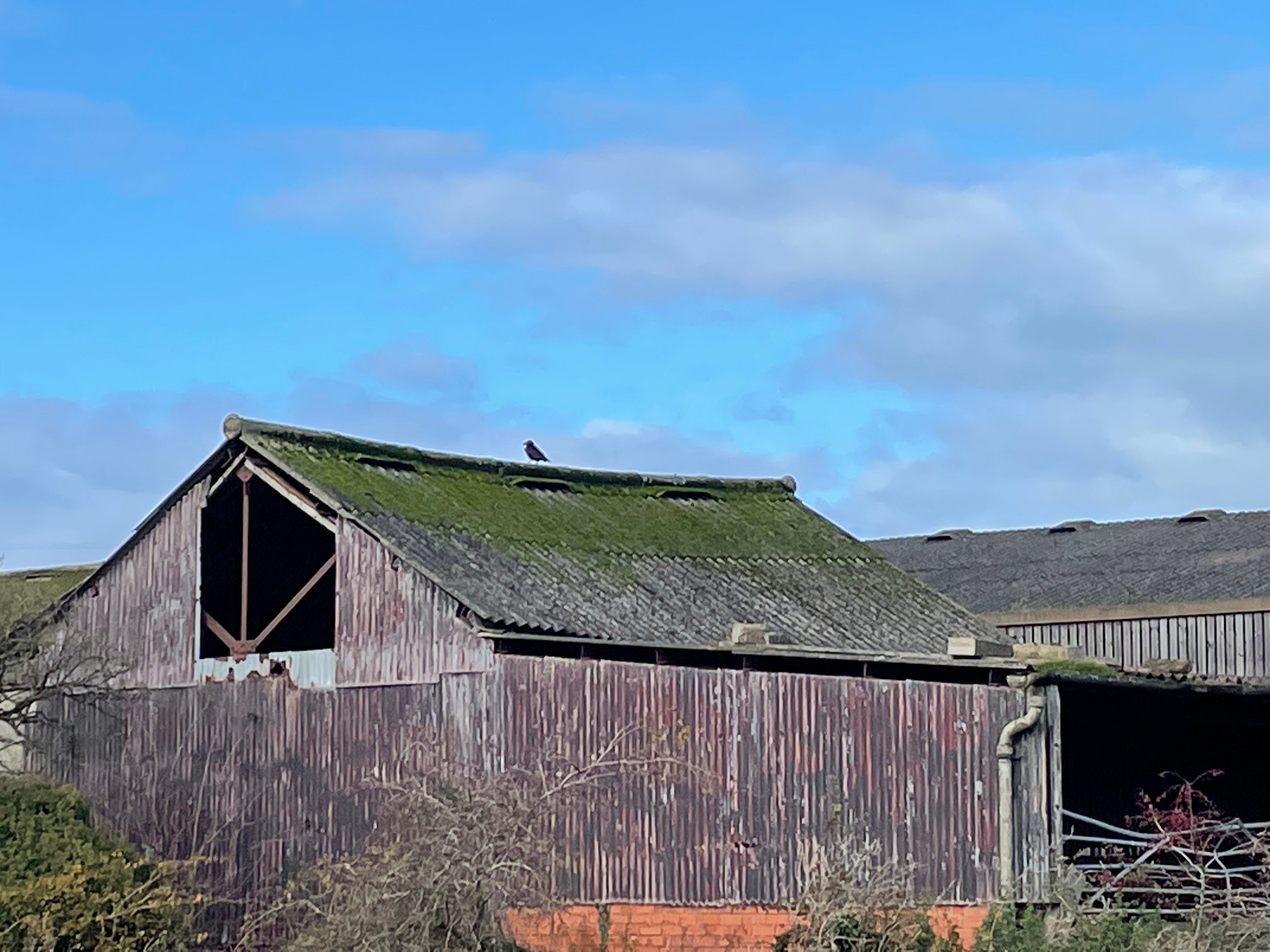
I can only write from a non-famer’s perspective. Now that I have noticed them through the winter branches, crumbling outbuildings and agricultural detritus offer me a striking aesthetic – something between steampunk and countrycore. Before the lambs and daffodils arrive and distract me with their obvious loveliness, I notice instead the glimmer of degrading metal in rare sunlight, the ramshackle elegance of twin grain towers, or a red lawnmower sat lonely, waiting for grass to grow.
*that’ll be the rain