First Fruits
July

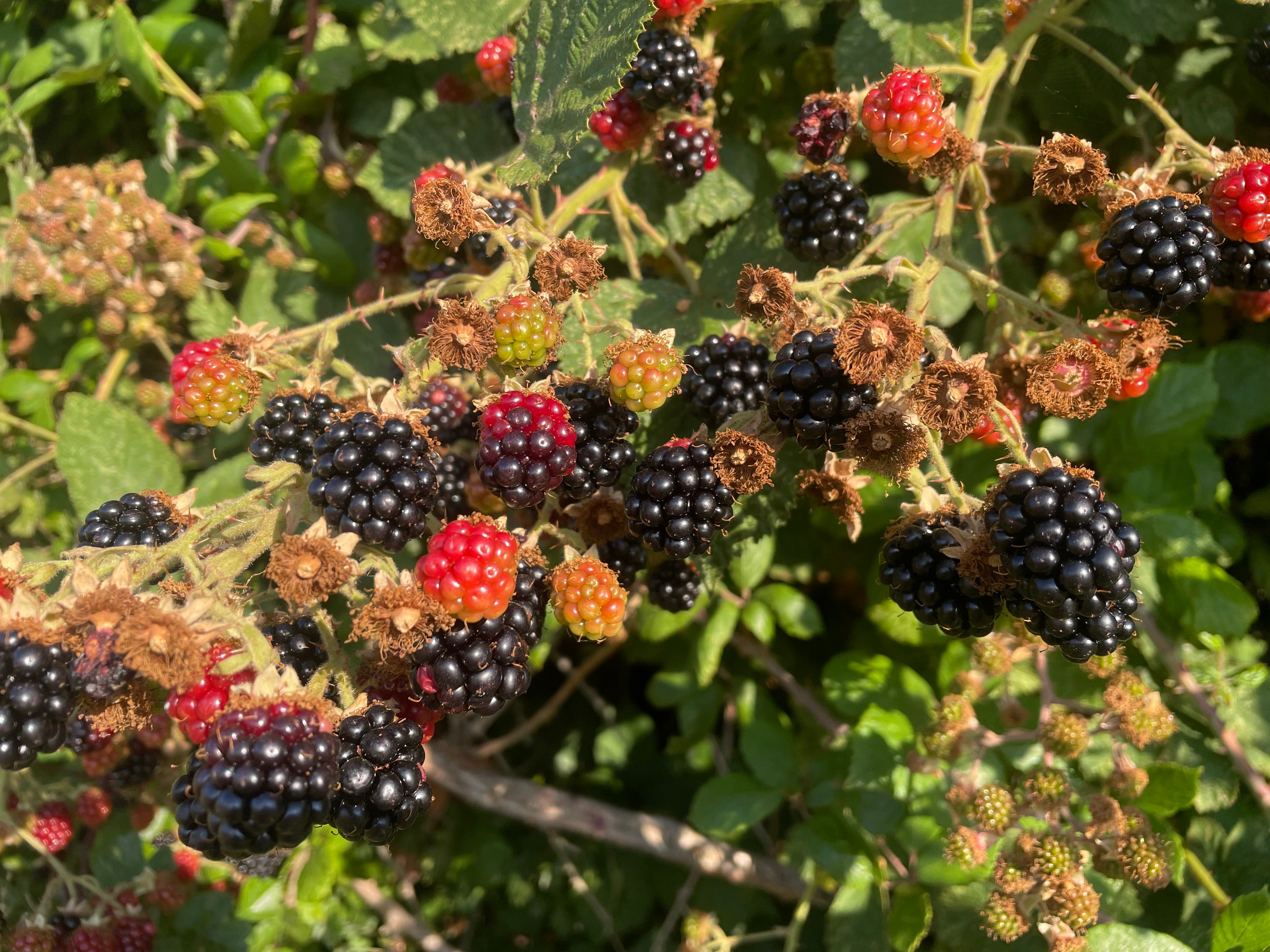
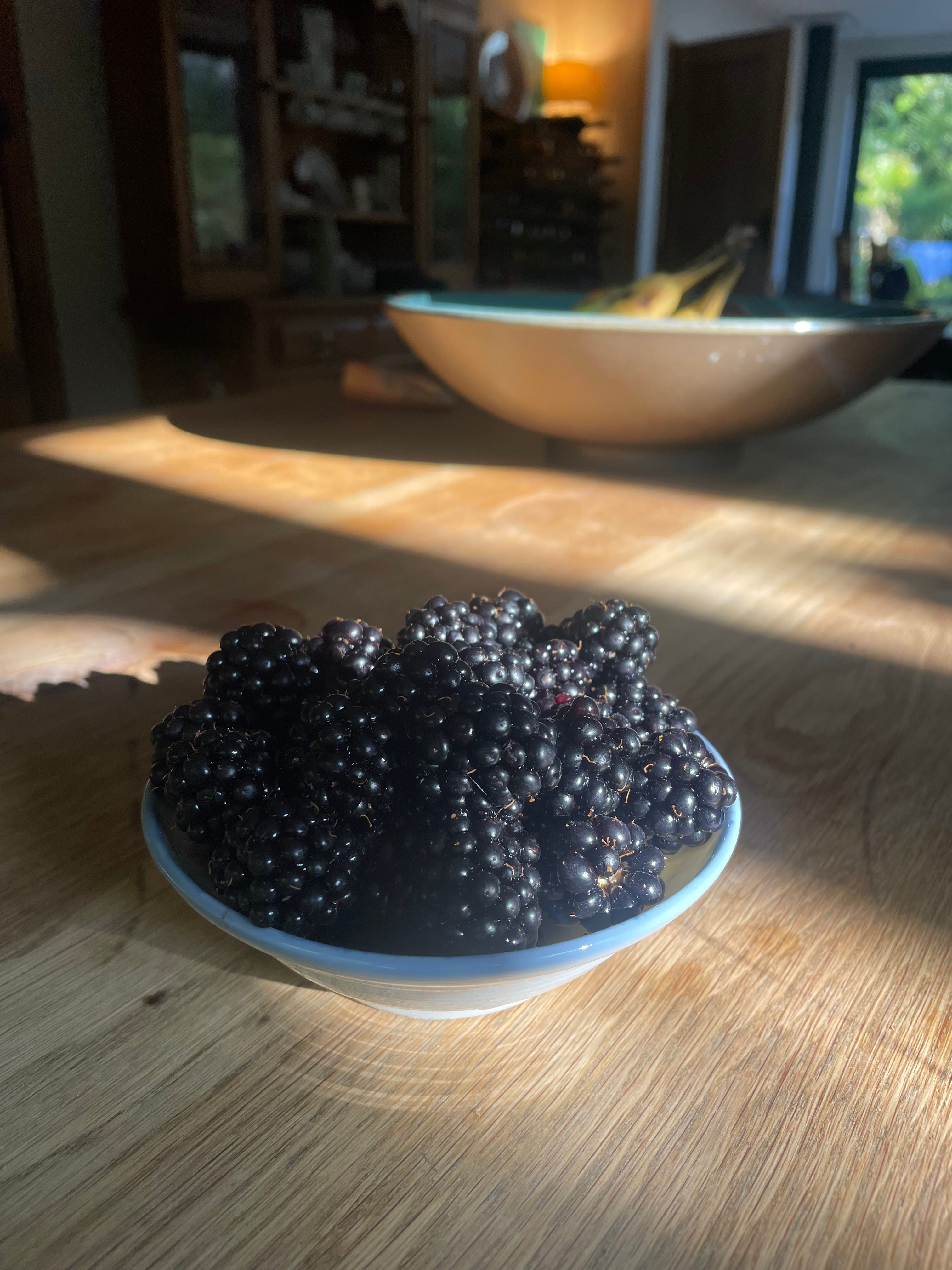
On the corner of one of the back fields, where the footpath meets the fishing lake, the first and best blackberries appear. These are the ones so fat and juicy that you would never consider hiding them in a cake or pie. They fall off the bramble straight into your mouth.
Like many of the fruits of the land, this year they have appeared a few weeks early and I have already plucked a breakfast handful three or four times this month. There are apples ripening on our tree, fallen damsons splashing the ground with purple, and offerings of bags of plums on the verges.
Tomorrow, it will all make sense. As we take our leave of July, we greet Lammas or the ‘Gwyl’ (feast) of August. Generally understood to derive from the Anglo-Saxon hlāfmæsse or ‘loaf mass’, it is a celebration of new wheat gathered in and the bread produced from it. As a Christian festival, loaves would be brought into churches for blessing, and in some cases might be pulled into pieces and buried in barn or field corners to protect the grain and ensure the fertility of future crops.


This was traditionally also chance for a party. Lammas fairs marked the end of the hungry months when stores of food had diminished, and celebrated the labour of agricultural workers and the coming of plenty. Once haymaking was complete, arable land could be turned over to commoners for pasture until spring planting, and Lammas fields still exist in some parts of the UK, pockets of shared space marking out half the agricultural year. There is some evidence that this rotational system of growing and grazing benefits both humans and the natural environment, creating sustainable productivity for flood meadows in particular.
I will visit the corner of my own sacred Lammas field and make my own harvest tomorrow. Then I will break my fast with toast and blackberries and wander down to the Thames, where the flood meadows are dry and blooming with wildflowers and cattle.