
The Hare and the Snake
May

I was distracted by a young hare this week. It darted ahead of me, all sinewy legs and ears, and I was so enchanted I missed my turning into the field I had been aiming for and ended up taking a much longer route than I had planned. My friend calls hares ‘eldritch’ things – unearthly beings that bring strange luck into the world. My day was touched. I was, in any case, pleased to have stretched my own legs in a decent run and experienced the thrill of the encounter.
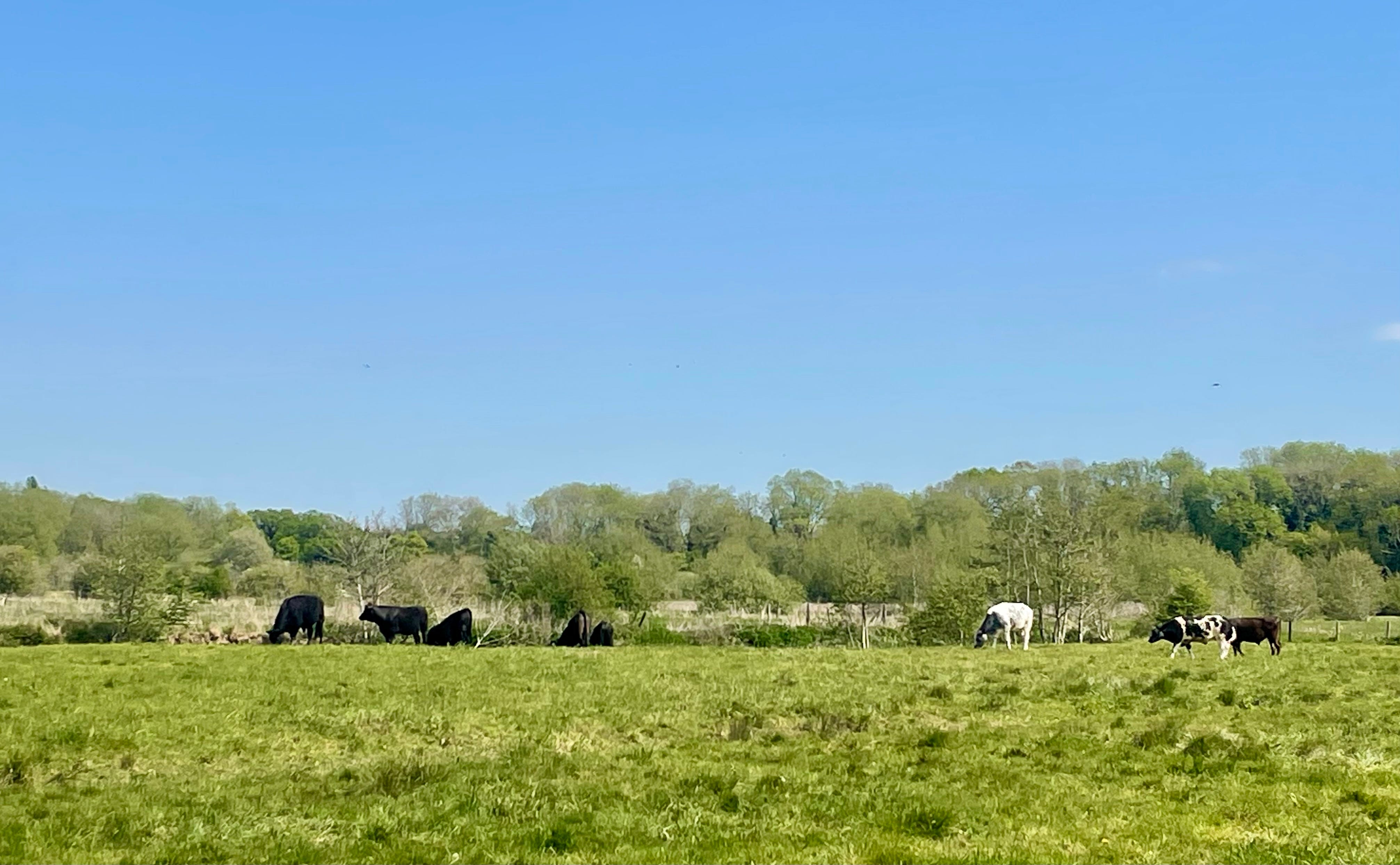
At the tail end of last week, I stumbled across another oddity. I’d planned a ramble along the river at Mister Lovell, back up and round through Crawley where there are views back down the hill, a chance to enjoy a tiny bit of elevation without melting into the heat of an unseasonable start to May. It’s a fair-weather walk, often flooded or mired in mud at other times of the year, and conditions were perfect. Cows were shin-deep in the water and larks climbed the thermals, casting their piping noise over the valley.
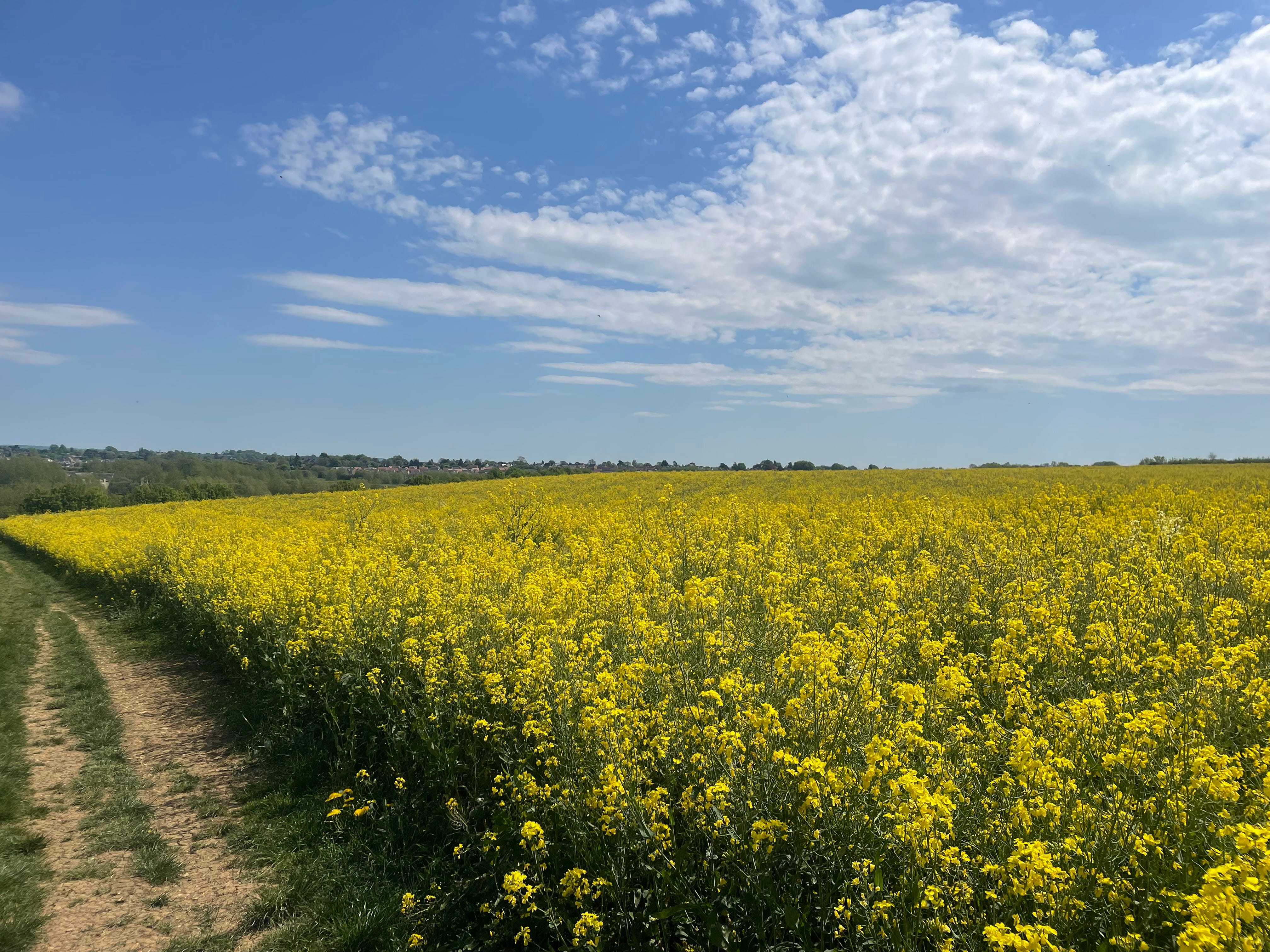
Crossing the one road on the walk and passing into a field of oil seed rape, I was annoyed to see a square of black plastic matting abandoned hedgeside by some local vandal. It screamed out in contrast with the rest of the bucolic scene: litter, pollution, the decline of civilisation. But a second later I spotted the sign next to it announcing that it was part of a reptile survey and should be left in place. Some sleepy snake or lizard could have been dosing underneath as I read. And somebody would be along at some point, I assumed, to count and categorise it.


I stood in the field of oil seed rape, noticing the perfect contrast between yellow flower and blue sky, and basked in the warm knowledge that people care enough to lay down mats and offer refuge to reptiles. The wildlife survey and the hare both brought me instant and absolute joy. For me, these moments are worth grasping onto and inspecting. I turn them over in my hands, checking them for wounds or defects. When there are so many terrible events in the world, so much erosion of everything that makes a good life, I need to be sure that these tiny signs of hope can be reckoned and verified.
I do not know how many reptiles inhabit West Oxfordshire, although I think we might well host four out of the six native species and I’ve seen evidence of a couple in our garden. It turns out finding trustworthy data about animal populations can be a slippery endeavour.* After spotting a second hare on my morning run, I went in search of information, feeling certain that their numbers must be soaring for me to have been visited twice on one day. Some sources suggest they are ‘declining’ (The Wildlife Trusts) and there has been popular support for a close season prohibiting shooting of breeding hares and leverets following the success of Chloe Dalton’s striking memoir, Raising Hare. But the British Trust for Ornithology reports in its 1995-2025 mammal monitoring that the brown hare has ‘increased significantly’ – a fact eagerly repeated by other online sites, including a commercial supplier of wild game and the Chief Executive of the Countryside Alliance.
Sometimes what is cause for optimism and what should send us spiralling into pessimism is not clearly defined. As with the famous rabbit-duck illusion, we can interpret everyday signs in contradictory ways, depending on our perspective. I flip from sadness at small indicators of failing biodiversity to excitment at new initiatives to reintroduce creatures or plants into the landscape. Weighing up evidence is only one way to respond; acknowledging the eldritch and its accepting its wonder, if only for a few seconds, is always an option.
*and sadly the authoritative-sounding Oxfordshire Amphibian and Reptile Group seems to be defunct.
Food for thought. Thanks, Alison.