Into the Long Grass
May

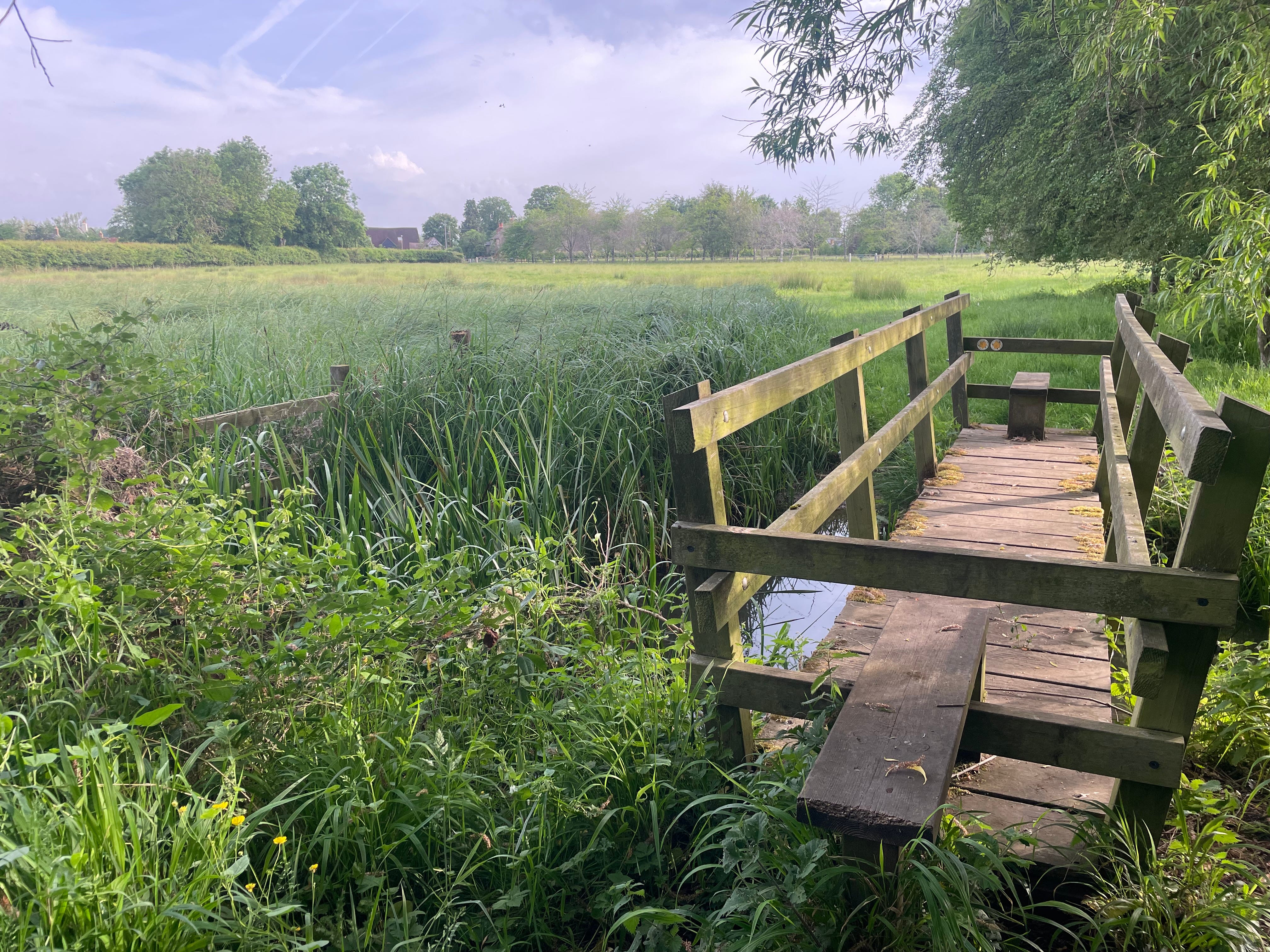
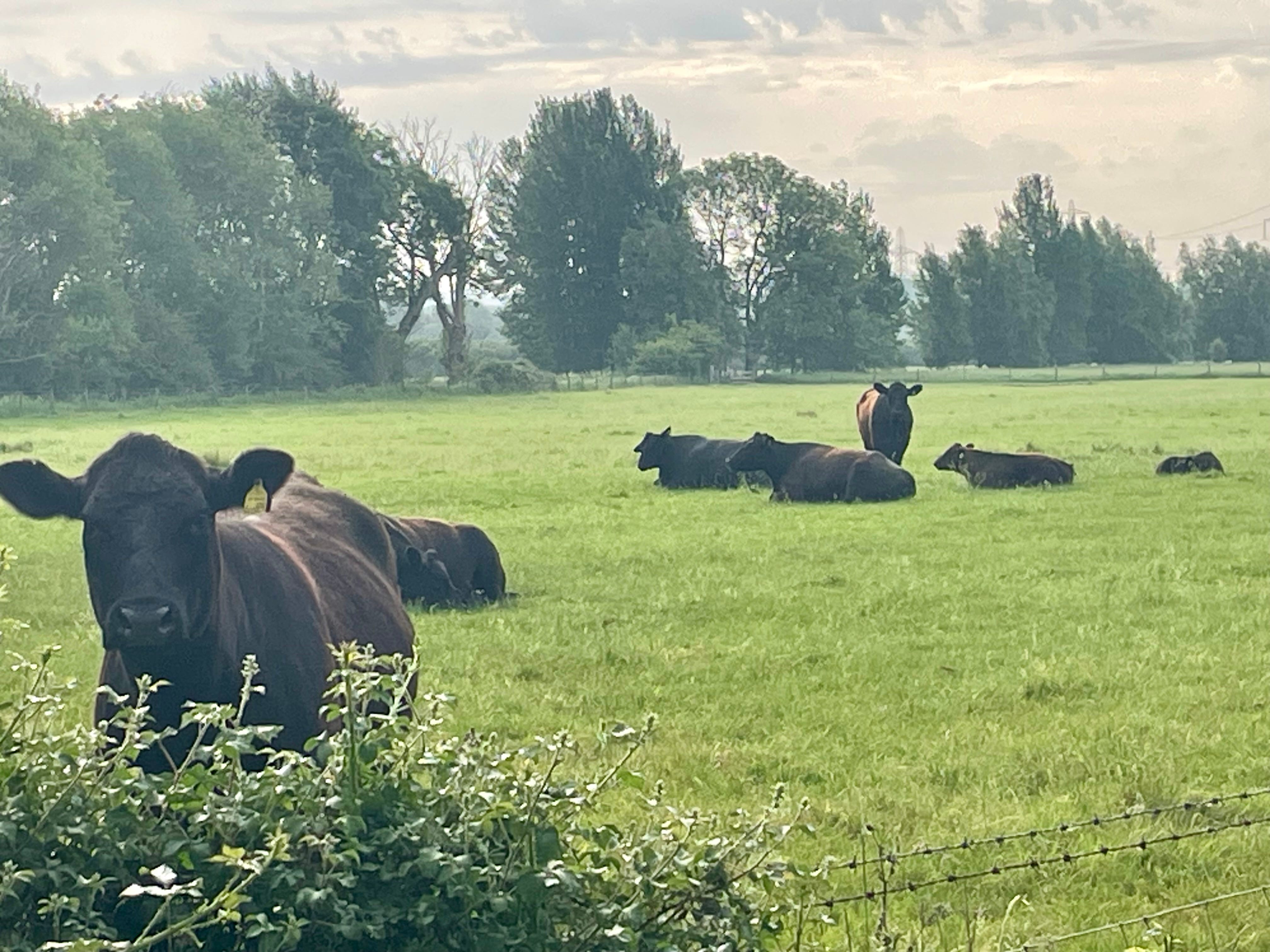
The bird of the week for me is the Cetti’s Warbler. I heard one as I wandered through the little copse by the otter bridge this morning, on my way to visit the resident bull and his crew. Its song is like a joyful toddler playing with a very loud squeaky toy, somewhat belying the RSPB’s description of ‘a shy bird that likes to skulk about in patches of scrub and long grass.’ I’ve not encountered one before and have added it to my list of ordinary wonders. What other delights are hiding out in our grasslands right now?
It’s coming to the end of ‘No Mow May’, and many of our lawns and public spaces have been allowed to relax and stretch, temporarily becoming wild and wayward. Daisies and buttercups scatter, bees and moths spiral upwards, the earth beneath is shaded and cool during the half-term heatwave. A faint aura of judgement sometimes buzzes around the campaign, like a fussy hoverfly: councils are not fulfilling their duties to keep the environment tidy; lazy homeowners are letting the side down by not maintaining a smooth surface to their gardens. Then there are concerns about unintended consequences – the litter that collects in the unkempt verges, the worry that insects and other creatures will settle into the long grass only to be violently evicted again come June. But the benefits are still legion, not least a sense of relief that my own outdoor patch seems slightly less dishevelled in comparison for a month.


In all honesty, I quite like appearing dishevelled in certain circumstances. We took a long walk in the eastern Cotswolds on Bank Holiday Monday, a hot trek across mostly open countryside, but including a small section that passed through a golf course. Much of the path followed a sheltered avenues of trees winding between the bunkers and tees, but once in a while we were thrust into the light, forced to scuttle across a tightly-groomed fairway like beetles emerging from the long grass. It can be disconcerting traversing these smart expanses of land, dodging flying balls and buggies filled with well-dressed golfers, especially if you are sweaty and carrying scruffy rucksacks. At one point, we were approached by a fellow waving his club, telling us we were ‘way off course.’ We politely turned tail and found an alternative way down a public lane, although later study of the OS map suggested the original right of way really does meander across the neatly trimmed putting green of the final hole.
Areas of long grass on a golf course are called the roughs, and they are designed to ‘increase the unpredictability and difficulty of playing’. Long grass, like anything left to its own devices to run a little bit rugged, adds gratifying diversity to our world, a bit of shade, a gentle challenge to easy puttering across a manicured lawn.
I’m in danger of kicking an important task ‘into the long grass’ this week because it’s scary and hard. Now I’m thinking of it like a beast in the undergrowth, waiting for me. Write a short passage or poem imagining something unusual lurking in an overgrown ditch or unmowed lawn…
Create a meeting between rough and smooth characters (a rough diamond and smooth operator, a hairy badger and a smooth snake, a rambler and a golfer, the choice is yours). Write a scene that brings them into conflict.
We often talk about blades of grass, but can we be more imaginative in our language? Spend 15 minutes describing grass in all its variety and splendour. Use of many different colours, shapes, movements as you can and conjure some new metaphors to help you.